
Blissy or Promeed? Which Low-Tox 100% Silk Pillowcase is Better

Updated: Aug 17
I've Tried Blissy & Promeed Silk Pillowcases: One Performed Better When Comparing Quality, Hair & Skin, Low-Tox Parameters, and Sustainability
Blissy was the first brand I gravitated to when I decided to try a silk pillowcase. It seemed to be a pretty mainstream brand, I liked the color options, their marketing was put together nicely, they had a cute name, and I could get it on Amazon. I quickly took to the cool, smooth feel and my hair was noticeably less frazzled, but after making my way through a few pillowcases fairly quickly, I needed to try another brand to see if it was silk being silk or was it Blissy. I looked more intentionally into a few other brands and Promeed was happily situated at the top of the list to try next. Let's uncover my findings...

But First, Are Silk Pillowcases Low-Tox?
PILLOWCASES MADE FROM NATURALLY SOURCED MATERIALS
A few eco-friendly pillowcase options that are made from naturally sourced fibers include bamboo, cotton (notably organic cotton), hemp, linen, silk, and wool. Sourced from plants, bamboo, cotton, and linen are vegan options, whereas silk is harvested from silkworms and wool is grown from sheep. These earth-conscious materials come with beneficial characteristics such as being naturally hypoallergenic, dust mite resistant, moisture-wicking, and naturally antibacterial, depending on which fabric you select to suit your personal preference.
Natural fibers can still be treated with flame retardants and synthetic dyes, so look for certifications like OEKO-TEX STANDARD 100, MADE SAFE, and GOTS (Global Organic Textile Standard) so you can trust that the fabric is actually low-tox.
IS ORGANIC SILK LOW-TOX?
Organic silk is more sustainable, low-tox, and earth-friendly compared to conventional silk because harsh chemicals are avoided in degumming & dyeing and organic silk is produced without the use of synthetic pesticides or fertilizers. This results in fewer chemicals coming into contact with your skin in concert with a smaller environmental footprint.
Silk, whether its organic or conventional, is biodegradable and does not shed microplastics like synthetic fabrics... a low-tox win for you and the ecosystem. Although organic silk may not rank as the most eco-friendly naturally sourced option, it remains a more sustainable, less toxic fabric than synthetically produced materials like polyester, microfiber, spandex, and nylon. Worth a re-mention, to ensure that your organic silk is undeniably low-tox, check for the recognized certifications listed above.
WHAT ARE THE BENEFITS OF A SILK PILLOWCASE
Silk is naturally hypoallergenic which makes it more resistant to allergens like mold and dust mites. Silk fibers are uniquely structured allowing for excellent air circulation and moisture-wicking. This smooth cooling material offers incredible moisture management alongside reduced surface friction minimizing damage to your hair and skin.
Hair glides on silk which helps to manage frizz, tangles, and breakage. Skin does not get robbed of its own moisture or skin products that you apply. This promotes hydrated skin, efficacy of products, and slows down the formation of creases, fine lines, and eventually deeper wrinkles. Albeit outstanding at drawing in and quickly evaporating moisture, silk is less absorbent than cotton. This gives silk the upper hand when it comes to pulling less moisture and oil from hair and skin ultimately making it much less drying than cotton.
SOURCING SILK
Produced straight from nature, silkworm fiber is a natural protein fiber which is secreted by a silkworm in one continuous filament to form a cocoon. A silkworm will begin weaving a cocoon as it prepares to pupate and become a moth. The meticulously spun cocoons are harvested, softened by boiling, and unwound maintaining the integrity of the one continuous fiber. The unwound fiber is combined and twisted with filaments harvested from 5 to 8 other cocoons to make one raw silk thread. Degumming, dying, and weaving the silk threads completes the process of producing this luxe textile.
HARD TRUTH ABOUT HARVESTING
Without diving too deep here but respectfully addressing, that unless you specifically seek peace silk (or other cruelty-free silk), silk is sourced from cocoons during which the boiling process to soften the cocoons also eliminates the silkworm pupa inside before it can emerge as a moth.

Orders placed via Collaboration Links attribute commissions at no expense to you.
As an Amazon Associate, I earn from qualifying purchases via Amazon links.
Blissy vs. Promeed: Which is the Better Silk Pillowcase?
Quality, Performance, & Durability
Blissy: 100% Pure Mulberry Silk 22mm (momme) 6A

BLISSY QUALITY
As alluded to in the opening, I was happy with switching to silk from cotton, but I was going through Blissy pillowcases quickly. They were shredding near the zipper stops and, with the slightest wiggle when pulling a fresh washed case over my pillow, the tear would get even bigger. The fabric seemed to degrade a bit more with each wash. I replaced a few Blissy cases which had the same issue each time.
It wasn't until my fingers poked through the side opposite of the zipper when carefully stuffing my pillow back in on laundry day (my fingernails are natural and kept fairly short and smooth). There should be no reason why gentle pressure with the tips of my fingers should put a hole, three fingers wide, in the case. I moved on to another brand to see if maybe I'm a little too rough and tumble to have a silk pillowcase.
Promeed: 100% Mulberry Silk 30mm 3rd Gen 6A+

WyldOne
15% off all orders
(Free Shipping)
or
PROMEED QUALITY
In all fairness, the Promeed pillowcase that I selected is 30mm vs the 22mm Blissy. There is a notable difference in material thickness, quality, and durability. The overall texture of Promeed's silk feels more luxurious and is markedly not as fragile. With my new Promeed case, I have surpassed the average length of time in which signs of wear would start showing in each Blissy case (there was a pattern... highlighted below.) Promeed's zipper functions more smoothly and has better reinforcement stitching where the silk meets the zipper stops. I found Promeed to be superior in construction, texture, silkiness, thickness, durability, and value.
QUALITY, PERFORMANCE, & DURABILITY: CONCLUSION
Promeed 30mm performed better than Blissy 22mm when measuring quality, performance, and most notably durability which also gives Promeed the edge in value for your dollar.
BLISSY vs PROMEED: DURABILITY & VALUE
Cost | Size | Signs of Wear | Lifespan | No. of Trials | |
PROMEED 30mm | $65 | Standard | None yet | 4 months & going | 1 |
BLISSY 22mm | $59 | Standard | Holes: 2 months | Replaced: 3 months | 4 |
Sleep on This...
PROMEED 3RD-GEN SILK:
|
Holy Moly...
LONG LIVE THE QUEEN, or standard in this (pillow)case:
|
Hair & Skin Benefits
Blissy: 100% Pure Mulberry Silk 22mm (momme) 6A
BENEFITS OF BLISSY SILK ON HAIR
When I switched from a cotton pillowcase to Blissy, I could immediately tell the difference in the way my hair glided over the silk compared to cotton. It's cooler to the touch, and you feel less friction between you and the material. Silk is more breathable than cotton and you can feel that as well. I have fine hair and I'm experiencing fewer instances of 'crinkled' frizz where the weaker strands of hair around my face come into contact with the pillowcase overnight. If my hair was voting, Blissy comes out ahead of cotton for sure.
BENEFITS OF BLISSY SILK ON SKIN
I appreciate the sensory benefits of silk on my skin. My natural oils and nighttime moisturizer are more intact after coming into contact with silk all night versus cotton (the primary function of a cotton ball, cotton swab, or cotton towel is to absorb). My skin feels less agitated after sleeping on my side, so going to silk may be a great switch for you if you are a stomach sleeper or side sleeper. In short, it was notable that Blissy silk felt less irritating to my skin than cotton.
Promeed: 100% Mulberry Silk 30mm 3rd Gen 6A+
BENEFITS OF PROMEED SILK ON HAIR
The benefits on my hair after sleeping on Promeed silk, when compared to cotton, echo most everything I shared above under the Blissy section. Silk comes out on top across the board independent of the brand. Looking at Promeed versus Blissy when it comes to benefits on hair, Promeed has a more lux texture with better slip, so my hair felt smoother and less frazzled in the morning.
BENEFITS OF PROMEED SILK ON SKIN
Identical to the skin benefits I shared above for Blissy, Promeed outperformed cotton in the same ways. My skin felt generally more at ease and less irritated when comparing Promeed silk to cotton. I couldn't measure a distinct difference in skin benefits when comparing Promeed silk to Blissy silk. I would choose both over cotton.
CAVEAT ON SKIN RESULTS
As we move through changing seasons, experience varying stressors, and experiment with facial products & routines, our skin can be a chameleon throughout... good days and not so good days. Having said that, due to so many variables in an uncontrolled environment, I cannot empirically say that I saw a remarkable difference between Promeed and Blissy when comparing skin results like less dryness, fewer fine lines, etc.
Conversely, my skin did feel more nurtured by silk than it did with cotton, and I prefer the gentle feel of silk over the friction feel of cotton. Was a silk pillowcase my knight in shining armor for good skin? I believe my calm, low-maintenance complexion story can be accredited to shifting to a more simplified low-tox skincare routine... my silk pillowcase... part of the supporting cast.
HAIR & SKIN BENEFITS: CONCLUSION
Both Promeed and Blissy were kinder to hair and skin than cotton. Promeed had a slight edge on Blissy for hair benefits. There were no conclusive results indicating that either silk brand outperformed the other in skin benefits.
Available Sizes & Fit
Blissy: 100% Pure Mulberry Silk 22mm (momme) 6A
Standard (20" x 26")
Queen (20" x 30")
King (20" x 36")
Promeed: 100% Mulberry Silk 30mm 3rd Gen 6A+
Standard (20" x 26")
Queen (20" x 30")
King (20" x 36")
Kids/Toddler/Travel (13" x 18")
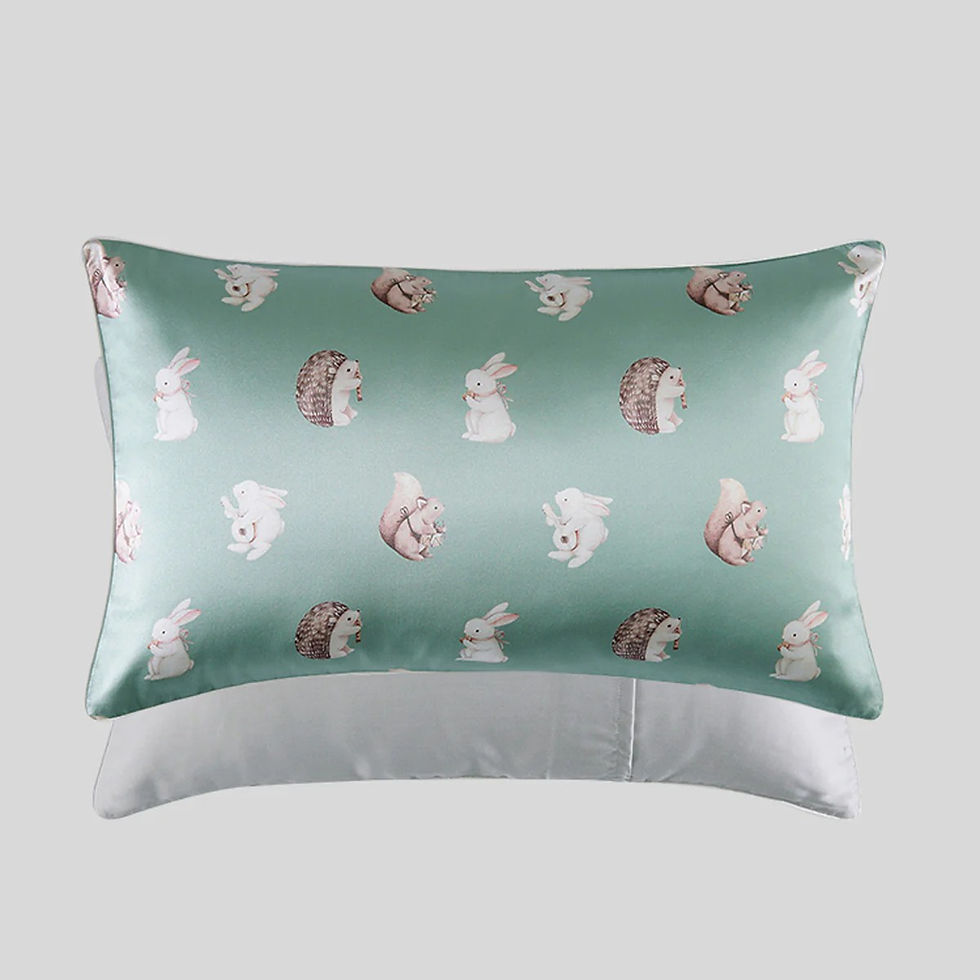
BLISSY vs PROMEED FIT
I found Blissy's standard size to be too wide for my standard pillow. Promeed's standard size, for some reason, has a better fit even though their dimensions are listed as being the same. Promeed's structure is better fitted and more snug which keeps my pillow from squishing too flat.
What About Momme?
BLISSY:
PROMEED:
|
Low-Tox Parameters
Blissy: 100% Pure Mulberry Silk 22mm (momme) 6A
Naturally Sourced Material
Naturally Hypoallergenic
No Microplastics
OEKO-TEX Certified: Free of toxic dyes & harmful chemicals
Promeed: 100% Mulberry Silk 30mm 3rd Gen 6A+
100% Organic Farming: No synthetic pesticides or fertilizer
Naturally Sourced Material
Naturally Hypoallergenic
No Microplastics
OEKO-TEX STANDARD 100 Certified: Free of toxic dyes & harmful chemicals
LOW-TOX PARAMETERS: CONCLUSION
Both Blissy and Promeed satisfy important low-tox qualifiers and are considered low-tox pillowcase options. Promeed has the slight advantage in that they clearly state they use organic farming methods to cultivate their silk.
Sustainability
Blissy: 100% Pure Mulberry Silk 22mm (momme) 6A
Although it takes more water to grow mulberry trees from which silkworms feed than growing bamboo for example, 100% silk is a completely biodegradable textile (zipper closure on a pillowcase excluded). If OEKO-TEX certified like Blissy, silk production can also use less chemicals than some bamboo and cotton production methods. High-grade silk is also more durable than bamboo which means less frequent turnover and waste.
Mulberry trees and silkworms are renewable resources, unlike non-renewable fossil fuels that are used in manufacturing synthetic fabrics (polyester, microfiber, nylon, spandex, and blends). These synthetic materials also release microplastics that persist in our environment.
Biodegradable, no harmful chemical treatments, longer lifespan, renewable resources, and no microplastics are some really great characteristics of 100% pure silk (w/ certifications) that make it a great sustainable choice. Blissy falls a little short on the lifespan piece but certainly satisfies the rest.
Promeed: 100% Mulberry Silk 30mm 3rd Gen 6A+
Again, all of the beautiful things about silk (w/ certifications) sustainability covered above in the Blissy segment can be applied to Promeed. What sets Promeed apart...
100% Organic Farming:
No harmful pesticides or fertilizers on mulberry trees
Healthier for soil and wildlife
Cleaner waterways
Safer for farmers and workers
Transparency:
Full supply chain disclosure
Monitored weaving facilities
Blockchain traceability system to track silk's entire journey
Closed Loop Silk Sourcing:
Ethical silkworm rearing
Partnerships w/ certified organic cooperatives
Conversion of byproducts into biodegradable packaging
Carbon Negative Packaging:
Plastic-free
Naturally decomposes
Biodegrades within 10-45 days when composted properly
Durability:
Higher-grade 3rd Gen 6A+ silk
Higher momme(mm) options
Longer lifespan
Less turnover & waste
SUSTAINABILITY: CONCLUSION
Promeed clearly takes the lead in sustainability over Blissy given the incredible effort they put forth to honor the practice throughout their entire cultivation process... from growing their trees, to rearing their silkworms, to weaving and dying their silk, to the way it reaches your home, and finally, to the time it retires into the earth.
A vegan fabric may be more of a priority for you over water usage or the driver of your decision may be biodegradability. We are fortunate enough to have access to a variety of eco-friendlier fabrics that speak at different levels to our varying personal values. It makes my heart happy knowing that more and more of us are paying attention. |
Blissy vs Promeed: Which is the Overall Better Silk Pillowcase?
Blissy and Promeed offer the benefits of a more low-tox sleep versus standard cotton (dyes & chemicals) and synthetic fabrics (dyes, chemicals, & microplastics). Both Blissy and Promeed also performed better than cotton (organic and conventional) when considering comfort, feel, temperature control, moisture wicking, absorptive properties, and hair & skin benefits.
When comparing silk brand to silk brand, Blissy is the more recognizable brand, but Promeed outshined in performance. Promeed edged out Blissy as the better low-tox silk pillowcase in quality, durability, value, hair benefits, and sustainability. Both brands are available on Amazon in addition to their own respective online stores. Promeed offers their 30 momme (mm) option on Amazon. A higher momme indicates a higher-grade of silk meaning it's thicker, stronger, more durable, and more luxurious. Personal preference is always the winner, so if you're looking for a low-tox pillowcase that is friendlier to your hair, your skin, and our environment, Blissy and Promeed are both good choices, although you may find yourself replacing Blissy at regular intervals. That was my experience, but it doesn't mean it will be yours. Sweet dreams!
An Extra Detail for You
MY LAUNDRY ROUTINE
I launder bedding weekly, use an LG front load washer, have a water softener, wash with mild low-tox laundry soap, and turn the case inside-out.
If you want more details on the low-tox laundry soap that I use, pop over to my Bloop Laundry Soap Review and Dirty Labs Laundry Detergent Review. I use Bloop on my linens & bedding, but both brands work wonders on dirt while taking gentle care of fabrics like silk.


Comments